
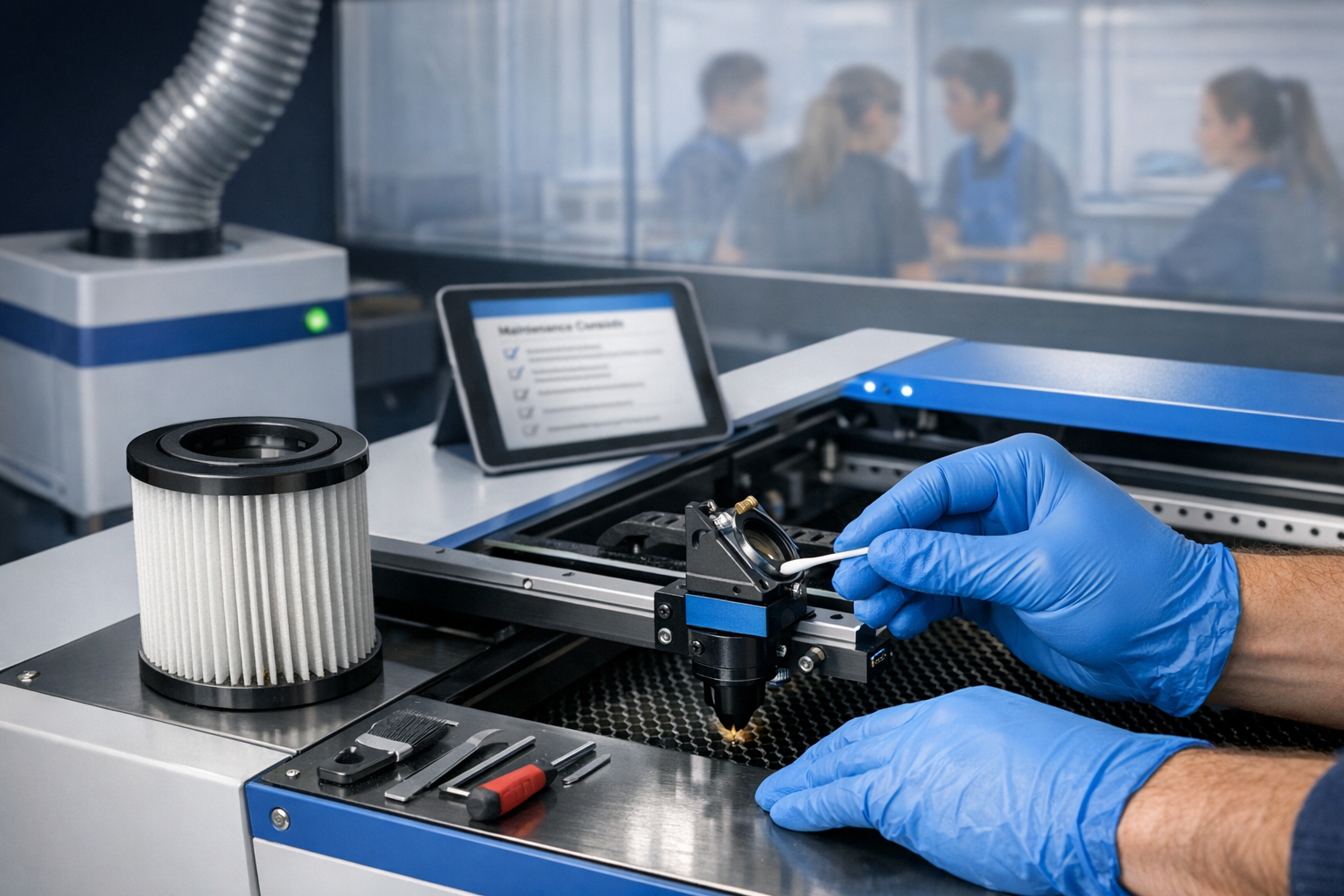
Why proactive laser cutter maintenance matters in education
Effective laser cutter maintenance in schools means following a simple, regular routine to keep the machine safe, reliable and compliant. For education, this reduces unplanned downtime in lesson time, protects students from fumes and fire risk, and avoids sudden repair bills that can wipe out a department’s budget.
In a busy design and technology workshop, a laser cutter might be used by dozens of students every day. Each job produces smoke, debris and heat. Without regular cleaning and checks, optics become dirty, filters clog and moving parts wear. Studies of industrial laser cutters show that poor maintenance can cause power loss of hundreds of watts per year, leading to rejects and costly downtime.IVYCNC
For schools, the impact is measured in lost teaching hours and cancelled projects. A failed tube during GCSE coursework or a blocked extraction system on the morning of an Ofsted visit can undermine both curriculum delivery and safety confidence.
Proactive maintenance turns the laser from a potential liability into a dependable teaching tool. A clear schedule, shared between staff and student technicians, ensures the machine is checked little and often rather than only when something goes wrong.
Daily and weekly checks to keep your school laser safe and reliable
Daily and weekly maintenance focuses on quick visual checks and basic cleaning. The goal is to keep optics clear, the bed free of debris and the motion system running smoothly so the laser cuts consistently and safely during every lesson.
At the start or end of each teaching day, a trained member of staff should: inspect and, if necessary, clean the lens and mirrors with the correct wipes and approved cleaning fluid; remove scrap material, dust and offcuts from the bed; and confirm the air assist and extraction are running before cutting. Industry guidance shows that a dirty lens can significantly reduce power and lead to overheating and permanent damage.
Once a week, schedule 15–20 minutes for deeper checks. Wipe down rails and visible bearings, then apply the manufacturer‑approved lubricant sparingly. Check that the fume extraction hose is secure, not crushed or split, and that airflow at the exhaust feels strong. Inspect filters or pre‑filters, and replace them if they are visibly clogged.
For education environments, these tasks are ideal for a technician or workshop manager, with students involved only where it is safe and supervised. Posting the checklist beside the machine helps ensure nothing is missed.
Termly servicing and when to call a specialist engineer
Beyond routine checks, schools need structured termly servicing and periodic professional support. This combination keeps the machine aligned, calibrated and safe for unsupervised student use in class sessions.
Once a term, plan a longer maintenance window—typically after school or on an INSET day. During this session, you can carry out tasks such as thorough cleaning of the internal cabinet, deeper inspection of belts and pulleys, checking for loose fixings, and verifying that the bed moves smoothly across its full travel. Water‑cooled systems should have their coolant checked and replaced in line with the manufacturer’s guidance, using only distilled or de‑ionised water to prevent scale.
Certain tasks are best left to specialist engineers. Annual servicing by a trained laser technician allows for professional alignment of mirrors, assessment of tube condition, replacement of worn parts and firmware updates where appropriate. This is also the time to review usage patterns, duty cycles and any recurring issues.
For schools that rely on the laser for coursework, an annual service just before the main project season reduces the risk of failures when students are under deadline pressure. A service report also provides useful evidence during internal audits and external inspections.
Protecting students and staff: ventilation, fumes and fire safety
Maintenance is not only about performance; it is critical to health and safety. Every cut generates laser‑generated air contaminants and heat, so a well‑maintained extraction and fire‑prevention setup is essential in education workshops.Carnegie Mellon University EHS
Poorly maintained extraction can allow smoke and vapours to accumulate, irritating eyes and lungs and potentially exposing students to hazardous by‑products from certain plastics and composite boards. Regular checks should confirm that the extraction unit starts automatically with the laser, filters are within their service life and ducting is intact with no leaks. Where local exhaust ventilation (LEV) systems are installed, schools must keep up with statutory examination intervals to remain compliant.
Fire risk is closely linked to housekeeping. Offcuts and dust left on the bed can ignite, especially when cutting card or thin plywood. Daily removal of debris, confirmation that a suitable fire extinguisher is within reach, and a clear rule that the machine must never run unattended are simple but vital controls.
Documenting these checks, and making sure all staff and authorised students understand them, demonstrates that maintenance is integrated into the school’s overall risk management and safeguarding approach.
Building a simple maintenance log that satisfies inspections
A well‑structured maintenance log helps schools prove that they manage their laser cutter responsibly. It also makes it easier to spot patterns—such as repeat faults or filters clogging faster than expected—that could indicate deeper issues.
Start with a straightforward paper or digital checklist kept next to the machine. Include daily tick‑boxes for key items: bed cleared, lens and mirrors visually checked, extraction confirmed, and any unusual noises or smells noted. Add weekly and termly sections for deeper cleaning, lubrication, inspection of belts and fixings, and coolant checks.
Each entry should record the date, the person carrying out the work and any comments or corrective actions. When an external engineer services the machine, file their report alongside the log. Over time, this builds a clear history of how the laser has been maintained.
During health and safety audits, insurer visits or local authority inspections, this evidence can be decisive. It shows that workshop staff are not simply reacting to breakdowns but are following a structured, risk‑based maintenance regime aligned with good practice.
Extending machine life and budgeting for long‑term reliability
Consistent maintenance extends the working life of a school laser cutter and makes future budgeting more predictable. Instead of sudden, large repair bills, departments can plan for consumables and wear parts over the machine’s lifespan.
Manufacturers often provide recommended service intervals and typical lifetimes for components such as tubes, filters and belts. By combining these with your own usage data—hours run per week, common materials and peak project periods—you can forecast replacement cycles. For example, a tube expected to last 3,000–5,000 hours might equate to several academic years in a school setting.
Allocating a small, annual maintenance budget for filters, optics, lubricants and at least one professional service visit reduces the risk of longer downtime later. Schools that follow structured maintenance checklists report fewer emergency call‑outs and more stable cut quality across years of use.
For heads of department and facilities managers, this approach supports capital planning. When a machine does reach end of life, there is clear evidence of responsible use and care—helpful when making the case for investment in a replacement that will support students for the next decade.

